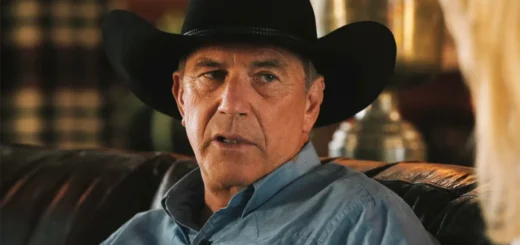
Kevin Costner Dives Into the Darker Side of American History in The West
Kevin Costner’s The West Uncovers the Grit and Truth of American History
No modern Hollywood star has invested more in exploring the mythology and legacy of the American West than Kevin Costner. From his early breakout in Silverado (1985) to the Oscar-winning Dances With Wolves (1990), and more recent works like Open Range (2003) and Horizon: An American Saga – Chapter 1 (2024), Costner’s passion for the frontier is undeniable.
So it’s no surprise he now brings his vision to Kevin Costner’s The West, a new documentary series that he hosts, narrates, and executive produces. As he notes in the opening of the series, “the West” means different things to different people. For many outside the U.S., it conjures up classic movie tropes—gunslingers, sheriffs, dusty towns, and bounty hunters. While those images aren’t entirely absent, the series has a far broader, more historically grounded scope.
At its core, The West is about America’s westward expansion—an epic, often brutal saga that outpaces the drama and violence of any Western film. Rather than celebrating the mythologized version of history, the series challenges long-held assumptions and confronts the whitewashed narratives that have dominated for generations.
One of the most persistent myths it tackles is the idea that the Western U.S. was an uninhabited frontier waiting to be claimed. In reality, the land was home to thriving Native American civilizations, and the expansion west was marked by conflict, dispossession, and bloodshed. While the show acknowledges the romanticized spirit of pioneering settlers, it focuses more sharply on how their advancement came at great cost to Indigenous peoples.
Importantly, the series doesn’t reduce Indigenous resistance to a footnote. It brings forward remarkable, often overlooked stories of resilience and defiance. As many historians point out, a nation can’t truly understand itself without confronting its own past—and that’s precisely the mission of this series.
Pulitzer Prize-winning historian Doris Kearns Goodwin, best known for Team of Rivals, the inspiration for Spielberg’s Lincoln, joins as executive producer and contributor. She appears alongside a wide range of authors, experts, and Native American voices, offering depth and balance. The historical reenactments are impressively produced, elevating the series beyond the typical documentary fare.
Across its eight episodes, the series follows key figures whose lives intersect with pivotal moments in early American history:
- Episode 1 begins in the 1780s, post-Revolutionary War, as the young United States acquires vast new territories. It explores the violent clashes with Native Americans in the Northwest Territory, focusing on the formidable Miami leader Little Turtle, who unified tribes in resistance.
- Episode 2 centers on John Colter, a legendary figure from the Lewis and Clark expedition, considered the first true “Mountain Man”—a rugged explorer of the untamed frontier.
- Episode 3 tells the story of missionaries Narcissa and Marcus Whitman, who journeyed along the Oregon Trail in 1836 to spread Christianity to Native populations, reflecting the spiritual motivations tied to expansion.
- Episode 4 examines the power of the Comanche nation and the widely publicized kidnapping of Rachel Plummer, whose story shaped settler perceptions of Native Americans during the height of the newspaper boom.
- Episode 5 shifts focus to Texas and its rebellion from Mexico, leading to its short-lived republic status. It also covers the California Gold Rush and introduces Joaquín Murrieta—a bandit and folk hero believed to be the inspiration for Zorro.
- Episode 6 spotlights radical abolitionist John Brown and how his violent campaign in Kansas became a flashpoint in both the slavery debate and the westward movement.
- Episode 7 delves into the Fetterman Fight of 1866 in Wyoming, highlighting the strategic brilliance of Lakota warrior Crazy Horse and the growing tensions between settlers and Native nations.
- Episode 8 explores the Johnson County War in Wyoming—a bloody dispute between wealthy cattle barons and smaller ranchers, later dramatized (and famously derailed) in the 1980 film Heaven’s Gate.
In all, Kevin Costner’s The West offers a sobering and richly detailed portrait of a defining era in American history. It doesn’t shy away from the darker chapters and aims to give voice to those too often written out of the story. By peeling back layers of myth and confronting uncomfortable truths, the series helps paint a fuller picture of how the American West was really won—and at what cost.