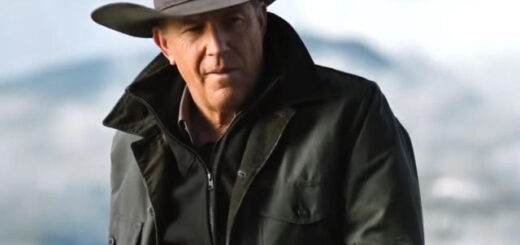
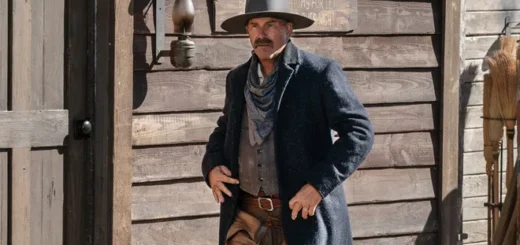
‘Wilder Than Wild’: Kevin Costner Unpacks the Myth of the American West
Kevin Costner Unpacks the Real Wild West in Upcoming Docuseries
Was the Wild West really as lawless and untamed as legend suggests? Ahead of the release of his new docuseries Kevin Costner’s The West on Sky HISTORY, the Hollywood icon sets the record straight.
From spaghetti Westerns like The Good, the Bad and the Ugly to classics like Butch Cassidy and the Sundance Kid, the myth of the “Old West” has long been immortalised on screen. But while these films created a lasting legacy, they also helped cement a host of misconceptions — from the lone gunslinger trope to a romanticised view of frontier life.
Now, Kevin Costner — no stranger to Westerns himself — is revisiting the past in a new light. The Dances With Wolves star and director has teamed up with Pulitzer Prize-winning historian Doris Kearns Goodwin to dive deep into the untold stories of the American frontier.
A Genre Reimagined
Costner has always had a soft spot for Westerns, inspired by epics like How the West Was Won. But as a filmmaker, he’s long been committed to portraying a more grounded reality.
“Everything that happened in Dances with Wolves or Open Range or Horizon actually happened out there,” he tells Sky HISTORY. “I didn’t make those stories up. They were interactions that happened a million times.”
Yes, the characters may be fictional, but the experiences — the tension, the displacement, the survival — were very real. His latest project aims to bridge the gap between cinematic myth and historical truth.
Rewriting the Narrative
One of the core truths the docuseries aims to confront is how the expansion of the United States came at a devastating cost to Native American tribes.
“We misled Native Americans for our own good — and we kept doing it, from one shore to the other shore,” Costner reflects. Dances With Wolves, which saw his character assimilate into a Lakota Sioux community, was a rare early example of a film acknowledging this reality. Now, The West goes further, unpacking centuries of struggle and resistance.
A 400-Year Journey
Contrary to popular belief, the “Wild West” wasn’t confined to just a few chaotic decades. While many historians place the era between the 1860s and 1890s, Costner sees it as part of a much longer, messier history.
“America happened in inches,” he says. “For 400 years, we were moving slowly — it was hard-fought, it was contested, it was taken, it was regained.”
From the founding of Jamestown in 1607 to the tragic end of Sitting Bull in 1890, the docuseries traces a continuous thread of expansion, resistance, and reinvention — a story far more nuanced than traditional Westerns ever suggested.
Beyond the Hollywood Lens
Costner is quick to acknowledge the power — and the limitations — of early Westerns. “People fell in love with the imagery,” he says. “They couldn’t believe how big the country was and how beautiful it was. When we put music to it and saw someone on a horse, we just wanted to keep seeing that image.”
But Kevin Costner’s The West is less about the dream and more about the difficult truth behind it — the battles fought, the promises broken, and the resilience of those caught in the crossfire.