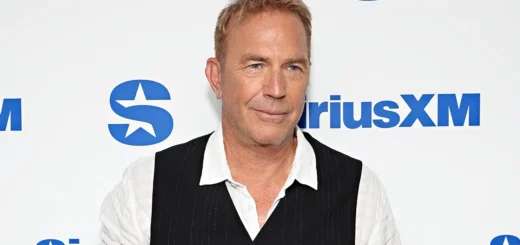
LAST NIGHT: George Clooney attacked Kevin Costner — and received a brutal “lesson” he won’t forget.
LAST NIGHT: A Heated Exchange Between George Clooney and Kevin Costner Sparked a Much Bigger Conversation
What began as another celebrity disagreement quickly turned into something far more meaningful — a national discussion about free speech, respect, patriotism, and the growing divisions shaping modern America.
According to reports circulating online, George Clooney publicly criticized Kevin Costner over his views on traditional values, patriotism, and the direction of modern American culture. Clooney, well known for his outspoken political opinions and activism, appeared confident that public opinion would support his position.

But if he expected Costner to quietly back down or avoid responding, things unfolded very differently.
Instead of reacting with anger or personal attacks, Kevin Costner answered with a calm and thoughtful statement that many supporters are now calling one of the strongest celebrity responses of the year. The veteran actor — whose career has remained largely separate from Hollywood’s constant political conflicts — chose not to escalate the tension. Instead, he used the moment to address what he believes is a deeper problem affecting American society.
“People say opinions like mine divide the country,” Costner reportedly said. “But what truly divides people is refusing to listen to anyone who thinks differently.”
The statement immediately exploded across social media. Supporters and critics alike began debating the meaning behind his words. Some viewed his comments as a defense of open dialogue and freedom of thought, while others argued that public figures should challenge ideas they consider harmful.
Regardless of political views, one thing became clear very quickly: Costner had shifted the conversation.
What started as criticism between two celebrities suddenly became a broader debate about America itself.
A Different Kind of Response
At a time when celebrity feuds often turn into personal attacks and viral insults, Costner’s approach surprised many observers.
Rather than attacking Clooney directly, he focused on the larger issue of how people communicate with one another.
“What’s dangerous,” Costner continued, “is using fame and influence to shame ordinary people simply because they don’t agree with Hollywood politics.”
That message resonated with many Americans who feel frustrated by increasing pressure to conform politically in entertainment, media, and public life.
For years, discussions about politics, culture, and national identity have become increasingly polarized. Public figures often face pressure to choose sides, while audiences are encouraged to view disagreements as personal battles rather than conversations.
Costner appeared to challenge that mindset entirely.
Instead of promoting more division, he argued for mutual respect — even between people who strongly disagree.
Observers noted that his comments sounded more disappointed than angry.
There was no shouting.
No dramatic confrontation.
No attempt to humiliate anyone for attention.
Instead, the message was simple: disagreement should not automatically lead to hatred.
Speaking From Experience
Costner’s words carried additional weight because of his decades-long career in Hollywood.
Having spent years inside an industry known for fierce political and cultural debates, he spoke as someone who has witnessed major shifts in public discourse firsthand.
Then came one of his most widely shared remarks of the night:
“It’s not different opinions that weaken a country,” Costner said. “What weakens it is fear, intolerance, and teaching people to hate one another over politics.”
That statement quickly spread online and became one of the most discussed quotes from the exchange.
Supporters praised the actor for emphasizing unity rather than division. Many argued that his words reflected a growing exhaustion among ordinary Americans who are tired of constant political conflict and cultural warfare.
Others said Costner was expressing concerns many people quietly feel but rarely say publicly.
Whether people agreed with him or not, his comments clearly touched a nerve.
Soon, the discussion expanded far beyond Hollywood.
Radio hosts, podcasters, political commentators, and social media personalities all began weighing in. Some framed the situation as a clash between competing visions of America. Others viewed it as evidence that audiences are becoming increasingly skeptical of celebrity activism altogether.
The Conversation Grew Even Bigger
As reactions intensified, Costner continued emphasizing personal responsibility and respect.
“I’m not perfect,” he reportedly admitted. “I’ve made mistakes too. But I still believe a strong country is one where people can speak freely, disagree openly, and still respect each other as fellow Americans.”
That sentiment appeared to resonate across political lines. Even some critics acknowledged that respectful disagreement remains essential in any democratic society.
Many observers believe modern public discourse has become increasingly hostile.
Social media often rewards outrage.
Television debates prioritize conflict.
Nuanced opinions receive less attention than extreme reactions.
Against that backdrop, Costner’s comments stood out because he wasn’t demanding agreement — he was encouraging coexistence.
And for many people, that message felt refreshing.
The Statement That Captured Attention
Then came the line that supporters say changed the entire tone of the conversation:
“America was never built on fear or hatred between citizens,” Costner declared. “It was built on courage, freedom, and the belief that people with different views could still move forward together. So ask yourselves — who is really trying to unite this country?”
According to those present, the room reportedly fell silent.
Within minutes, the quote spread rapidly across social media, discussion forums, and news commentary programs.
Supporters viewed it as a powerful reminder of the ideals that historically united Americans despite political differences.
Critics argued it raised difficult questions about who truly contributes to unity and who benefits from division.
Either way, the impact was undeniable.
Many online users described the moment as a reminder that public debates cannot be won through ridicule alone.
Instead of escalating the conflict, Costner redirected attention toward larger principles — respect, dialogue, and unity.
Why This Story Resonated
The reason this exchange captured so much attention may have little to do with George Clooney or Kevin Costner specifically.
Instead, it reflects a growing frustration shared by many Americans.
Across the political spectrum, people increasingly worry about the breakdown of civil conversation.
Families avoid discussing politics.
Friendships end over ideological disagreements.
Online conversations become hostile within minutes.
Many citizens feel trapped in a culture that rewards outrage while punishing nuance.
Costner’s message seemed to speak directly to those concerns.
His argument was simple: disagreement itself is not the problem.
The real problem begins when people lose the ability to respect one another despite those disagreements.
Whether that vision is realistic remains open to debate.
But it is clearly a message that resonates with millions of people today.
A Moment Bigger Than Hollywood
In the end, what started as a celebrity clash became something much larger.
It became a conversation about freedom of expression.
About tolerance.
About responsibility.
About the future of public discourse in America.
George Clooney may have intended to challenge Kevin Costner’s views.
Instead, according to many observers, Costner transformed the situation into a broader discussion about national unity and mutual respect.
In an era dominated by outrage and division, that message struck a powerful chord.
And regardless of political affiliation, one lesson emerged from the controversy:
A society does not become stronger when people silence one another.
It becomes stronger when people can disagree passionately, speak honestly, and still recognize each other as fellow citizens.
For supporters, that became the true significance of Kevin Costner’s response.
Not the celebrity drama.
Not the headlines.
Not the clash of personalities.
But the reminder that unity is not created through uniformity — it is created through respect.
And many believe that may be a lesson America needs now more than ever.